
Book a MIAM Online.
Resolve Family Disputes Without Court
Our FIXED FEE online mediation service helps you reach agreements about your children, finances, and future. Calmly, fairly, and on your own terms. Book a MIAM and take the first step.

What Types of Family Disputes Can Mediation Resolve?
Whether you need to agree arrangements for your children or divide your finances, we provide mediation for all types of family disputes across England and Wales.

Child Arrangements
Child arrangement mediation covering where your child lives, contact schedules, holidays, schooling, and relocation disputes. Typically 2 to 4 sessions depending on complexity, ending with a written parenting plan. The government covers up to £500 towards your sessions.

Financial Mediation
Division of property, pensions, savings, debts, and spousal maintenance, including on divorce. Typically 3 to 5 sessions given the disclosure involved, ending with a Memorandum of Understanding for your solicitors to turn into a consent order.

MIAM
You may have heard that you usually need to attend a MIAM before applying to the family court. The court expects you to explore whether mediation could help, and a mediator will assess whether it is safe and suitable for your situation. If you need to proceed to court, we can provide the required MIAM certificate.
How Does the Mediation Process Work?
From your first call to a signed agreement, here is what the process looks like step by step.
1. Book a MIAM
We start with a private, one-to-one meeting where your mediator listens to your situation, explains the mediation process, and helps you understand your options. This is your MIAM.
2. The Other Party
If you both agree to mediate, the other party attends their own separate MIAM. If both sides agree, joint mediation sessions are arranged. If not, your court form is signed by a fully accredited FMC mediator working with our practice.
3. Joint Mediation Sessions
You attend online mediation sessions together, or in separate rooms if you prefer (shuttle mediation). Most families need 2 to 4 sessions, each lasting 90 minutes.
4. Parenting Plan
For child arrangement disputes, your mediator helps you create a practical parenting plan covering where your children live, contact schedules, holidays, schooling, and day-to-day decisions.
5. Finances and Property
For financial disputes, you work through the division of property, pensions, savings, debts, and maintenance with open financial disclosure and the guidance of your mediator. You also look at what each of you needs, including housing, health concerns, where the children will live, and anyone else living in the home.
6. Agreement and Court Documents
Once you reach an agreement, we can produce an Open Financial Statement and a Memorandum of Understanding. You can take these to your legal advisor to turn into a consent order, which can save you a great deal compared with paying solicitors to prepare everything from scratch.
What You'll Pay, Start to Finish
Fixed fees at every step. No hidden costs, no hourly billing, no surprise invoices.
MIAM Assessment
per person · 60 mins online
£90 concession rate for people on a low income.
Confirms whether mediation is right for your case.
Mediation Session
per person · 90 mins
Resolve children, finances, or divorce arrangements together.
Court Certificate
C100 · Form A · FM1
Court-valid document required to file with the Family Court.
Got Children? You Could Get £500 Towards Mediation
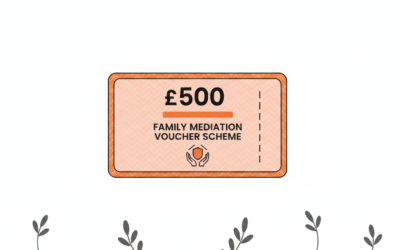
The Ministry of Justice Family Mediation Voucher Scheme pays up to £500 per family towards your mediation sessions (not the initial MIAM). We apply it directly to your fees, for cases involving arrangements for children.
Book Your MIAM →Who Is Your Family Mediator?
Abdul Wahid is an FMA trained family mediator registered with the Family Mediation Council, with over 10 years of experience helping families and businesses resolve disputes. When you book with BookMIAM, Abdul is your mediator from start to finish.
Every MIAM begins with a private, confidential one-to-one meeting where you can tell your story from your own perspective. There is no pressure. No judgement. Just clear, calm guidance about the options available to you.
What Are the Benefits of Family Mediation?
Family mediation has many advantages over other ways of resolving issues surrounding separation and divorce.
You Stay in Control
Family mediation recognises that you are the experts on your own family. It leaves the decision-making to you and your partner, giving you much more say in your future than having a judge decide for you.
Less Stressful
Mediation is built on communication and openness rather than the hostility that legal proceedings can bring. It aims to reduce conflict between you and your partner so you can make decisions together. The better you are able to cooperate, the easier the separation is for your children.
Significant Financial Savings
Legal representation and court proceedings can be expensive as well as traumatic. Legal aid is still available for family mediation, and the government's £500 voucher scheme can help with costs. Even without financial support, mediation is typically far cheaper than litigation.
Quicker Than Court Proceedings
Mediation is widely recognised as a faster way of resolving disputes than litigation. While the exact timeframe will depend on the circumstances of each case, mediation can often be concluded within weeks or months, whereas court proceedings typically take significantly longer, often many months or more than a year.
Of mediation cases reach a successful agreement, without going to court. (Source: Family Mediation Council)
Average days to resolve through mediation, compared to 450 through court. (Source: National Audit Office)
Government voucher scheme available to help cover the cost of mediation.
Guidance from Our Practice
Practical, plain-English articles from an FMC registered family mediator, across the areas we work in.

























Frequently Asked Questions
What is a MIAM?
A MIAM (Mediation Information and Assessment Meeting) is a confidential meeting with a trained mediator. It is a legal requirement before most family court applications in England and Wales. Read more about MIAMs.
Do I need a MIAM before going to court?
In most cases, yes. You need a MIAM before submitting a C100 (child arrangements) or Form A (financial orders). There are some exemptions, including domestic abuse and urgency. See the full list of exemptions.
How much does a MIAM cost?
A MIAM costs £125 per person, or £90 for people on a low income. The court certificate (FM1, C100, or Form A) is £40 where needed and appropriate. Mediation sessions are £180 per person per session. You may be eligible for the Ministry of Justice Family Mediation Voucher Scheme, which covers up to £500 per family towards mediation sessions afterwards, not the MIAM itself, for cases involving arrangements for children. View full pricing.
Do you offer a cheaper MIAM for people on a low income?
Yes. Alongside our standard £125 MIAM, we offer a £90 concession rate for anyone on a low income, no lengthy means test required. This makes BookMIAM one of the most affordable MIAM providers in England and Wales. Book your MIAM online to see live appointment times.
Can I do a MIAM online?
Yes. All our MIAMs are conducted online via secure video call. You can attend from anywhere in England and Wales.
What if the other party refuses to attend?
If the other party refuses, the relevant section of your C100 or Form A is signed by a fully accredited FMC mediator working with our practice, confirming this. You can then proceed with your court application.
How long is a MIAM certificate valid for?
A MIAM certificate is valid for four months from the date of the meeting.
Do you offer legal aid?
Legal aid may be available, subject to availability. Please get in touch so we can discuss your circumstances and the next steps.
Ready to Book Your MIAM?
Take the first step toward resolving your family matter. Book your MIAM online and attend from the comfort of your home.